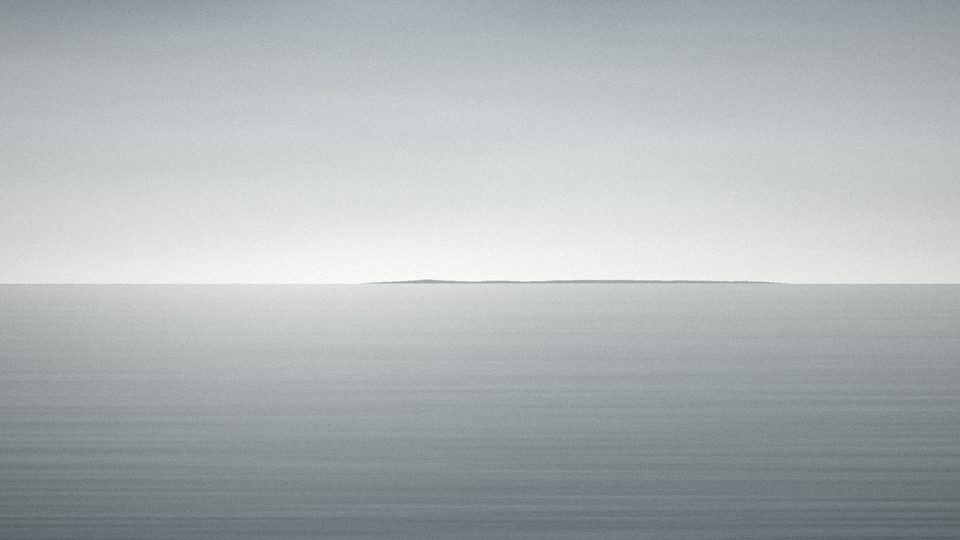
People sometimes ask how I get long exposures that are sharp, level and evenly exposed. The truthful answer is that I make a lot of mistakes slowly enough that I notice them. The routine below is what is left after a few years of doing that. None of it is clever; it is mostly a way of not skipping steps when my hands are cold.
Before leaving
I check three things the evening before: wind, cloud cover, and when the sky starts to brighten. Wind matters more than anything else. A light breeze will shake a tripod on soft sand just enough to soften a four-minute exposure, and there is no way to see it on the camera’s screen in the field. If the forecast shows gusts above about twenty kilometres an hour, I either pick a sheltered spot or plan for shorter exposures.
Batteries go in charged, the sensor gets a quick look, and the filters go into the bag clean. Cleaning a filter on a beach at dawn with gloves on is a reliable way to make it worse.
Setting up
I pick the spot, push the tripod legs into the sand and then leave it alone for a minute. Wet sand settles under the weight, and a tripod that is still moving will make the horizon drift during the exposure. Once it has stopped, I level the head, compose without filters, and focus manually at the horizon using the magnified view.
Then I meter without the filter and write the reading down. With a ten-stop filter, a sixtieth of a second becomes about sixteen seconds; with a ten-stop and six-stop stacked, it becomes several minutes. I keep a small card in the bag with the conversions, because doing arithmetic at five in the morning is not where I want to spend attention.
During the exposure
The viewfinder gets covered: on many cameras light coming in through the eyepiece leaks on to the sensor during long exposures and shows up as a faint haze or a band. I use a remote release, stand to the side so I’m not blocking anything, and resist the urge to check the camera.
Long exposures by the sea also give you time to watch. I have started noting what the light does while the shutter is open — whether the bright patch moved, whether a gust came through. It helps later, when two nearly identical frames look different and I want to understand why.
Afterwards
I check the histogram rather than the picture. On a small screen, a long exposure of grey water looks fine almost regardless of whether it is. The histogram shows clipping, and the magnified view shows whether the horizon is sharp. If either fails, I fix it and go again while the light still allows it.
Long-exposure noise reduction, which takes a second exposure with the shutter closed, doubles the time each frame takes. I leave it off on modern bodies and deal with the occasional hot pixel at home. On older bodies I used to leave it on.
A note on colour casts
Strong neutral density filters are rarely perfectly neutral. Mine push slightly warm, and stacked they push further. I make one reference frame of a grey card at the start of the morning with the same filters attached and correct to that, rather than trying to remember what the sea looked like.
Update, September 2026: a few readers asked about the reference frame. I now make it at the end rather than the start, because the filters warm up in the hand during a session and the cast changes slightly. It is a small thing, but it removed one step from the editing.